South Korea is rapidly expanding its overseas Korean-language education network, even as a growing number of local partners pull out of the King Sejong Institute program.
A total of 131 institute designations were terminated between 2013 and August this year, according to King Sejong Institute Foundation data submitted to Rep. Cho Eun-hee of the People Power Party.
Of those, 82, or 62.6 percent, followed decisions by operating organizations to end their agreements with the foundation, according to the data first reported by Newsis.
The trend has accelerated. Of the 35 institutes that closed over the past three years, 27, or 77.1 percent, did so at the request of their operators.
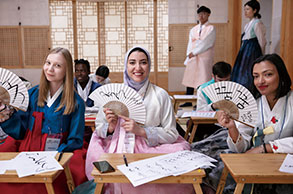
Founded in 2007, King Sejong Institutes are overseas Korean-language education centers supported by the Culture Ministry-affiliated foundation. Most are run by local universities or educational institutions, which provide personnel and facilities, while the foundation supplies funding, curricula, teaching materials and instructors.
Demand for Korean-language education continues to grow, fueled in part by the global popularity of K-pop, Korean films and television. A record 239,020 people studied at King Sejong institutes in 2025.
The government designated 29 new institutes this year, bringing the network to 273 institutes in 89 countries as of June. A total of 102 organizations in 45 countries applied, the largest applicant pool in five years.
Universities are also taking a larger role. The new additions include the first King Sejong Institutes in Greece, Rwanda and Sri Lanka, while 19 will be operated in partnership with Korean educational institutions.
Expansion, however, has not always translated into stability. Of the 131 institutes that closed, 44.3 percent operated for no more than three years. In 2025, 12 institutes closed, exceeding the 11 newly designated.
A foundation official told The Korea Herald that last year’s unusually high number of closures partly reflected the network's rapid expansion during the COVID-19 pandemic.
“Although we conducted the best verification possible at the time, there were limitations because we could not visit the institutions in person,” the official said, requesting anonymity.
Financial pressure also played a role. The foundation’s overall budget remained largely unchanged for about three years even as the network expanded. Rising exchange rates further reduced the real value of funding available to individual institutes, the official said.
The government’s proposed budget, which still requires parliamentary approval, includes increased funding for individual institutes.
“We are strengthening oversight so that institutes, once established, can remain in operation for as long as possible,” the official said.
yunapark@heraldcorp.com